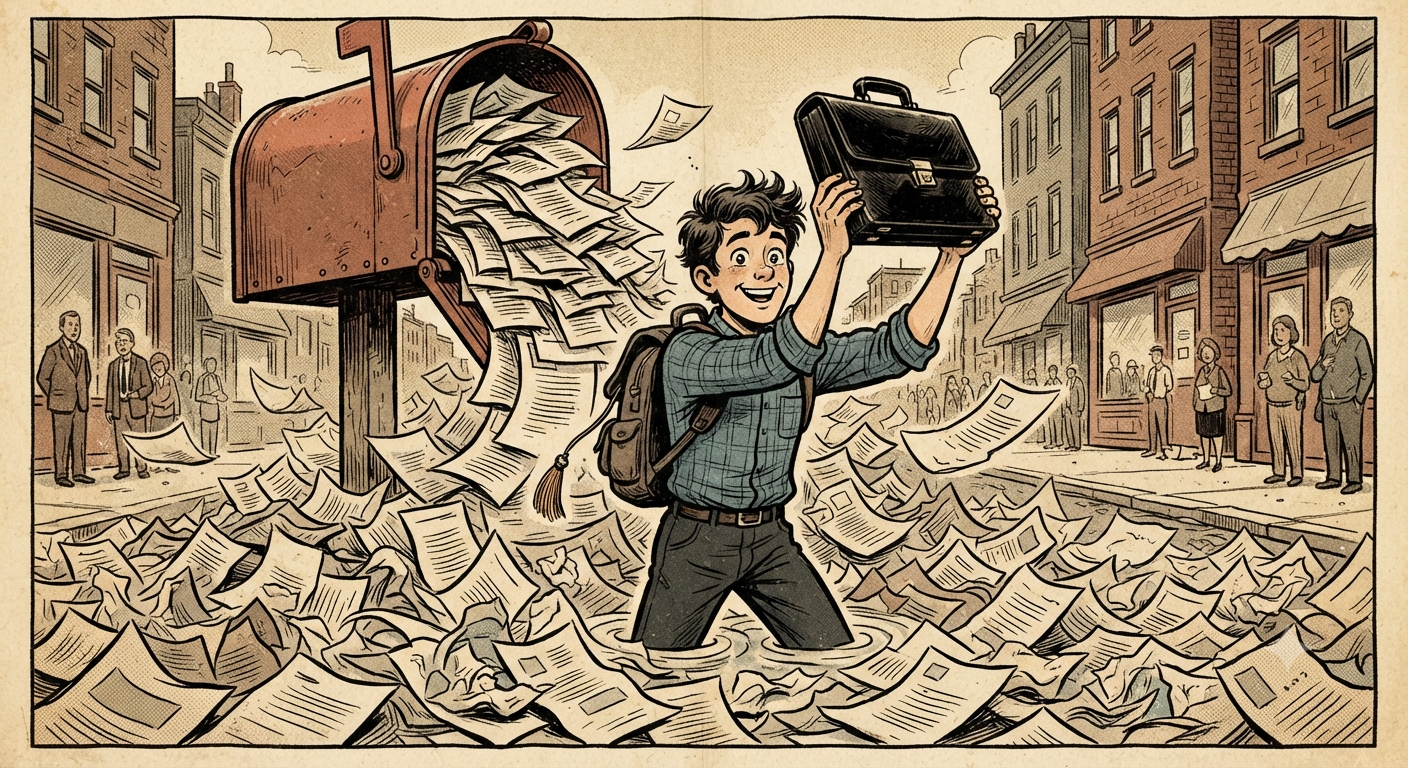
Everyone applied. Literally everyone.
The number everyone repeats is wrong
You've probably seen the claim: "75% of resumes are rejected by ATS before a human ever sees them." It circulates on every career blog and LinkedIn carousel, but it traces back to a defunct company and no verifiable study. Recruiters who actually use these systems tell a different story: most applicant tracking systems don't auto-reject resumes on formatting or keywords at all. They rank and sort. A human still has to open the file.
So why does it feel like your resume vanishes into a void? Because the real bottleneck isn't the software rejecting you — it's the sheer number of people you're competing against, and it's gotten dramatically worse in the last year.
The real number: 11,000 applications a minute
LinkedIn now processes an average of 11,000 job applications every minute on its platform, a 45% jump from the year before, according to reporting from The New York Times. Much of that surge isn't new job seekers entering the market — it's the same people, now armed with AI tools, applying to far more openings in far less time. One recruiter told the Times she pulled a single remote job posting after it drew over 1,200 applications and was still working through the pile three months later.
That changes the math for every applicant. A recruiter facing hundreds of near-identical, AI-polished resumes for one role isn't reading each one closely — they're skimming for the handful that make the fit obvious in the first few seconds. Your resume doesn't need to defeat a robot. It needs to survive a skim.
What actually gets a resume noticed in a flooded pipeline

Six seconds to make it count.
If volume, not software, is the real filter, the fix looks different than "trick the ATS." It looks like this:
- Match the job title and core skills in the first third of the page. Recruiters scanning fast look at the top before anything else.
- Cut duties, keep outcomes. "Managed social media" tells a skimmer nothing. "Grew organic reach 40% in six months" takes the same three seconds to read and says everything.
- Make the format boring on purpose. Clean single-column layouts, standard headers, and no graphics parse instantly whether a system or a person is reading. Novelty formatting costs you time you don't have.
- Tailor per role, not once for everything. With this many applicants per posting, a resume that could apply to any job reads as belonging to none of them.


Comments
Post a Comment